Unatafuta Nini?

1. First, let's get clear on what these three terms actually mean
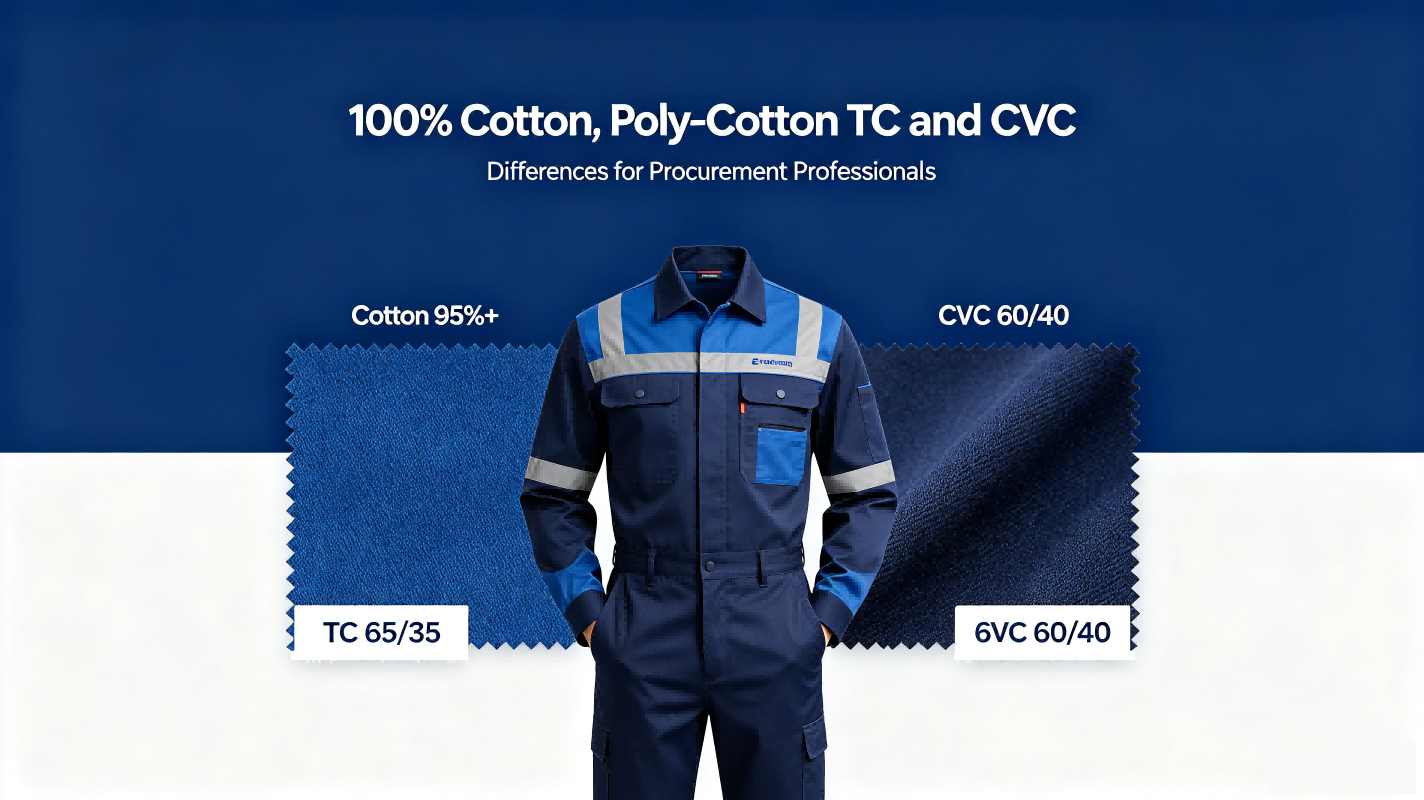
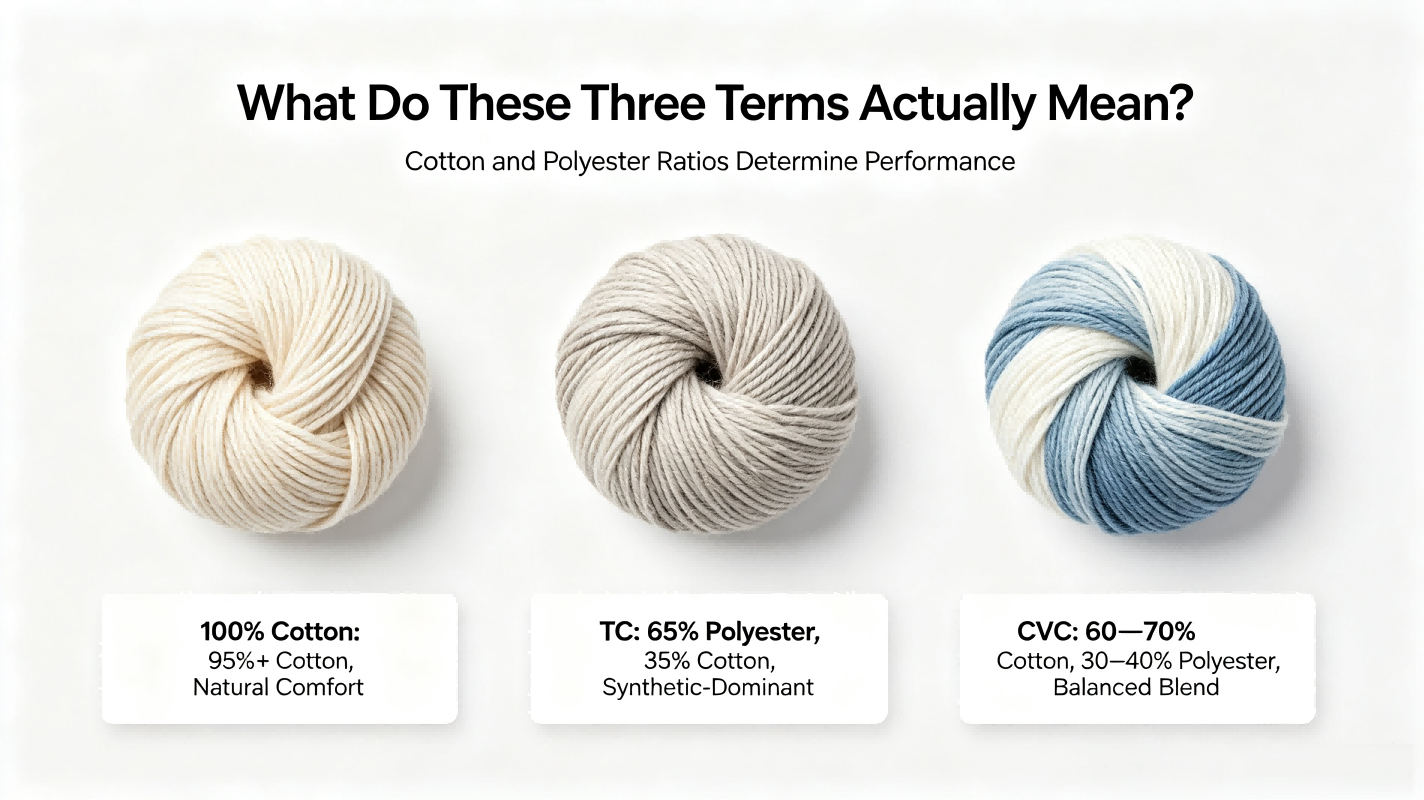
The fundamental difference between 100% cotton, polyester-cotton (TC), and CVC is simply the ratio of cotton to polyester. Different ratios determine the fabric's hand-feel, durability, and price.
100% cotton – cotton content of 95% or above (the remainder is a small amount of spandex or elastane). Cotton is a natural fibre—breathability and moisture absorption are its core strengths.
Polyester-cotton (TC) – also called TC (Tetoron Cotton), with polyester content above 60% and cotton below 40%. The most common ratio is 65% polyester + 35% cotton. Because polyester dominates, the performance leans more towards synthetics.
CVC stands for Chief Value Cotton, with cotton content between 55% and 70%, and polyester between 30% and 45%. Since cotton exceeds polyester, performance is closer to the comfort of pure cotton, while retaining the durability of poly‑cotton blends.
2. 100% cotton: comfortable and skin-friendly, but expect higher maintenance
100% cotton is the oldest and most well-known workwear fabric. Made from natural cotton, its fibre structure is loose and fluffy, giving it the best breathability and moisture absorption among the three.
The advantages of 100% cotton are real:
Breathability and moisture absorption are its biggest wins. Cotton's moisture vapour transmission rate can reach 8,000–10,000 g/m²/24h—about twice that of poly-cotton. When workers sweat, the fabric quickly absorbs moisture and spreads it outward, keeping the skin surface relatively dry. Cotton can absorb a significant percentage of its own weight in moisture, and does so quickly.
Skin-friendly, static-free, and lint-free. As a natural fibre, it doesn't irritate skin—even for sensitive types.
But the downsides are equally obvious:
High shrinkage. 100% cotton shrinks 4–6% after standard washing. A perfectly sized garment can be a full size smaller after a few washes. If the supplier hasn't pre-shrunk it, size deviations can make uniforms unwearable over time.
Wrinkles easily. Cotton lacks elastic recovery—after a day's wear, wrinkles are prominent. Jobs with appearance standards require frequent ironing. Wear it for a day without ironing and it looks like a rag.
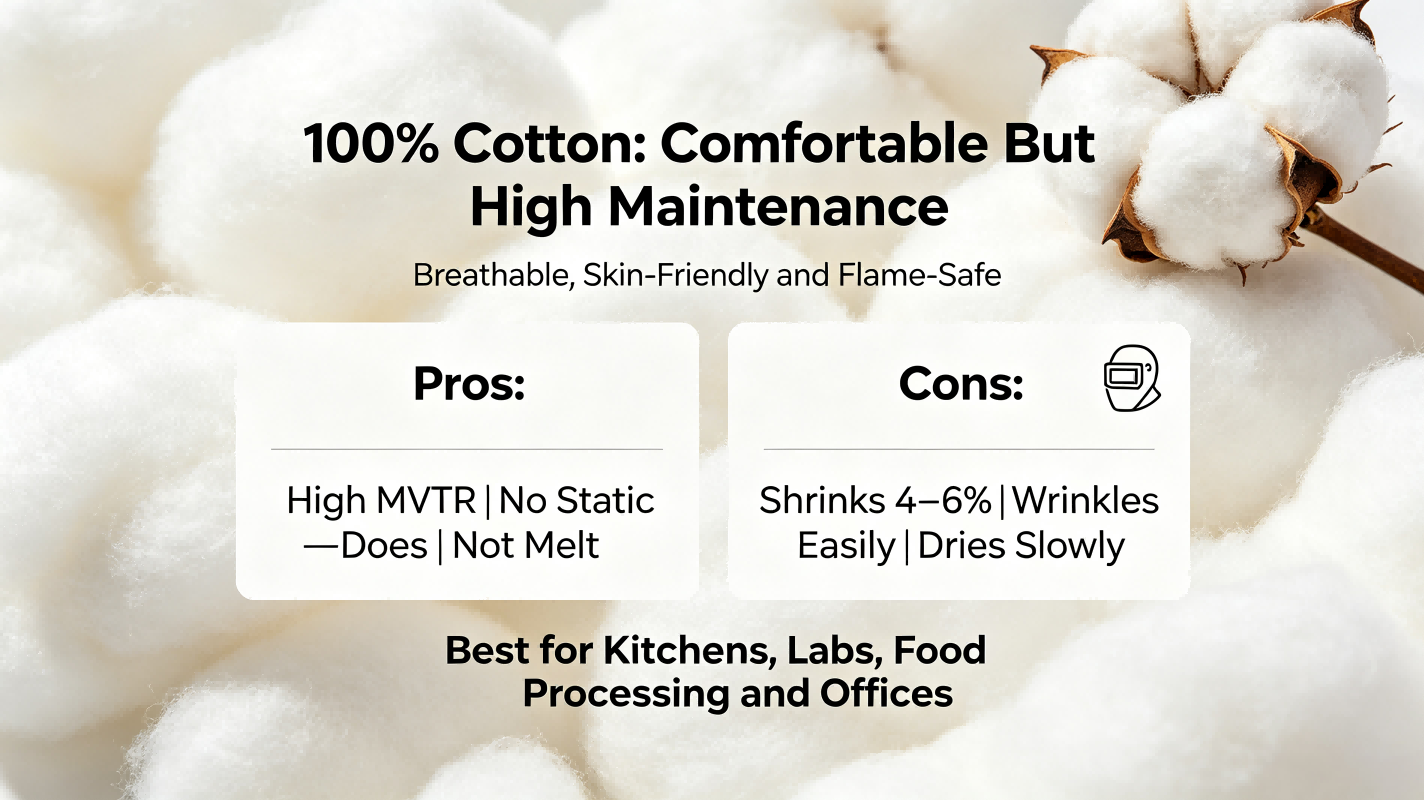
Dries slowly. When cotton absorbs sweat, the fibres swell and block fabric pores, reducing wet‑state breathability by 30–40% – leading to stuffiness and sticking to the skin. And because drying is slow, wet clothes stay damp for a long time.
Average abrasion resistance. Cotton's Martindale abrasion resistance is about 18,000 cycles – on the short side for heavy physical labour. After six months, collars and cuffs look worn and faded.
Which jobs are 100% cotton best for?
Food processing and commercial kitchens – food production areas restrict synthetics because fibre shedding is a contamination risk. Kitchens also have open flames – polyester would melt onto skin if heated. Additionally, cotton only loses moisture below 110°C and won't be damaged.
Hospital cleaning staff and lab technicians – they handle chemicals; cotton absorbs well and doesn't generate static.
Office admin and reception desks – low physical demand, image and comfort are priorities.
What to watch for when buying 100% cotton: Factor shrinkage into sizing – size up by 1–2 sizes when ordering to avoid post-wash fit issues. Choose combed cotton with a yarn count of at least 32s and a density of 110×70 or higher. Low-count coarse yarn cotton feels stiff and uncomfortable. Price-wise, a full cotton work set runs about 65–110 yuan per set; combed, high-density sets may exceed 120 yuan.
3. Polyester-cotton (TC): the most versatile workwear fabric – best value for money
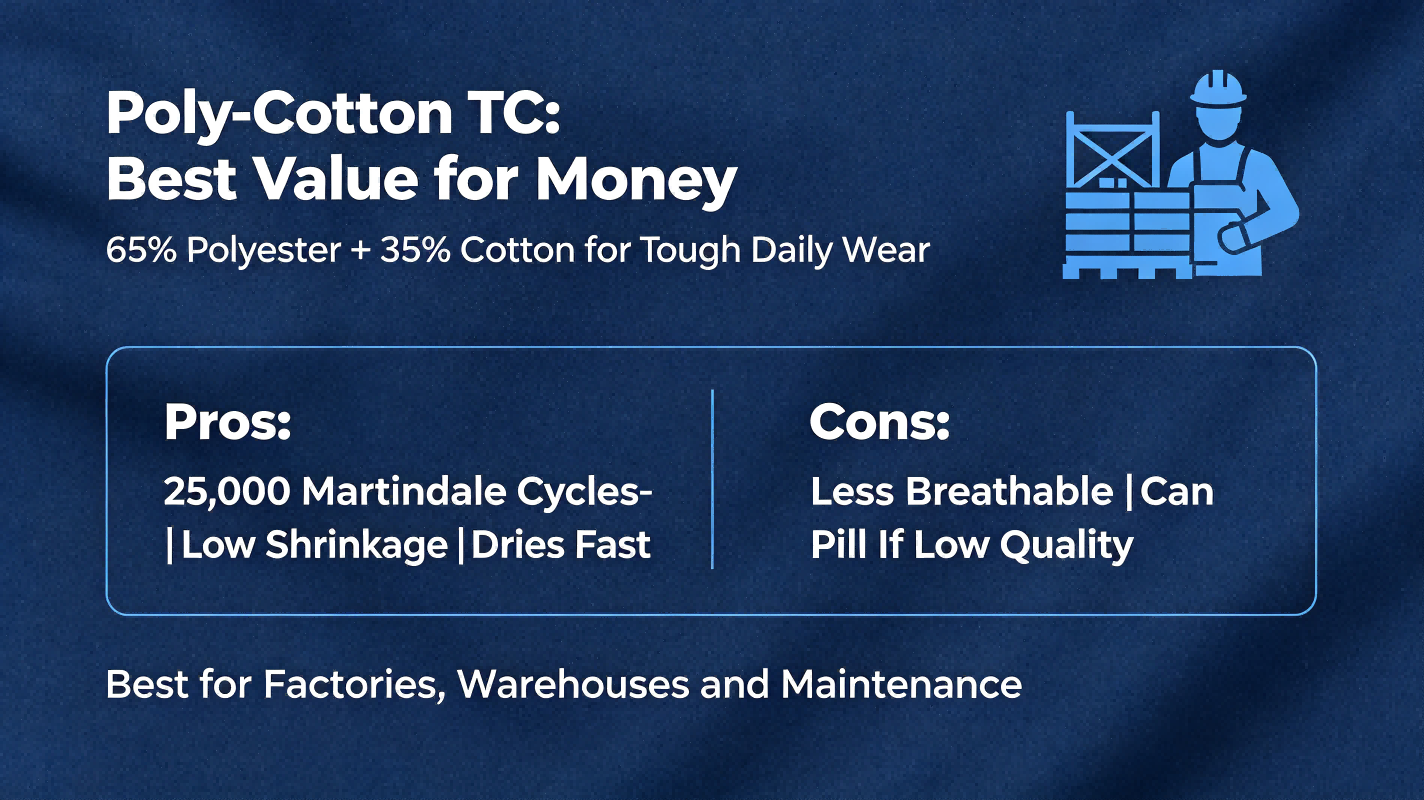
65/35 poly-cotton is the most widely used workwear fabric in China. 65% polyester and 35% cotton. The polyester provides the "backbone"—abrasion resistance, wrinkle resistance, and shape retention. The cotton provides the "soul"—retaining some breathability and moisture absorption.
The advantages of poly-cotton are very real:
Abrasion and wrinkle resistance. Martindale abrasion reaches 25,000 cycles—nearly 40% higher than cotton's 18,000. Tough, durable, and low-maintenance. Polyester's breaking strength is typically 800–950 N/5cm, and abrasion resistance exceeds 3,000 cycles.
Very low shrinkage. Only about 2.1% after standard washing. Buy the right size and it stays that way—no sudden loss of length.
Dries fast. Polyester doesn't absorb water—sweat stays on the surface and evaporates quickly. Can withstand industrial washing up to 50 cycles or more.
Great value. Poly-cotton costs 20–30% less than pure cotton. A 220gsm 65/35 twill costs about 12–16 yuan per metre. A full work set typically runs 55–95 yuan per set; bulk orders of 300+ can go down to 50–80 yuan.
But poly-cotton has downsides too:
Less breathable than cotton. In hot, sweaty conditions, it can feel stuffier. Unless workers are in extreme outdoor heat, poly-cotton covers most jobs.
Low-quality poly-cotton can pill. Cheap blends may develop fuzz balls with wear.
Which jobs are poly-cotton best for?
Factory assembly lines, warehouse pickers, maintenance technicians, construction site support staff. These roles involve heavy activity, high abrasion, and frequent washing (2–3 times a week)—poly-cotton's toughness and wrinkle resistance are a perfect match.
What to watch for when buying poly-cotton: For spring/autumn, choose 240–260 gsm; for summer, lightweight versions drop to 200–220 gsm. The 65/35 poly-cotton blend is the most widely used workwear fabric in China—balanced performance at a friendly price.
4. CVC: the "balanced option" between cotton and poly-cotton
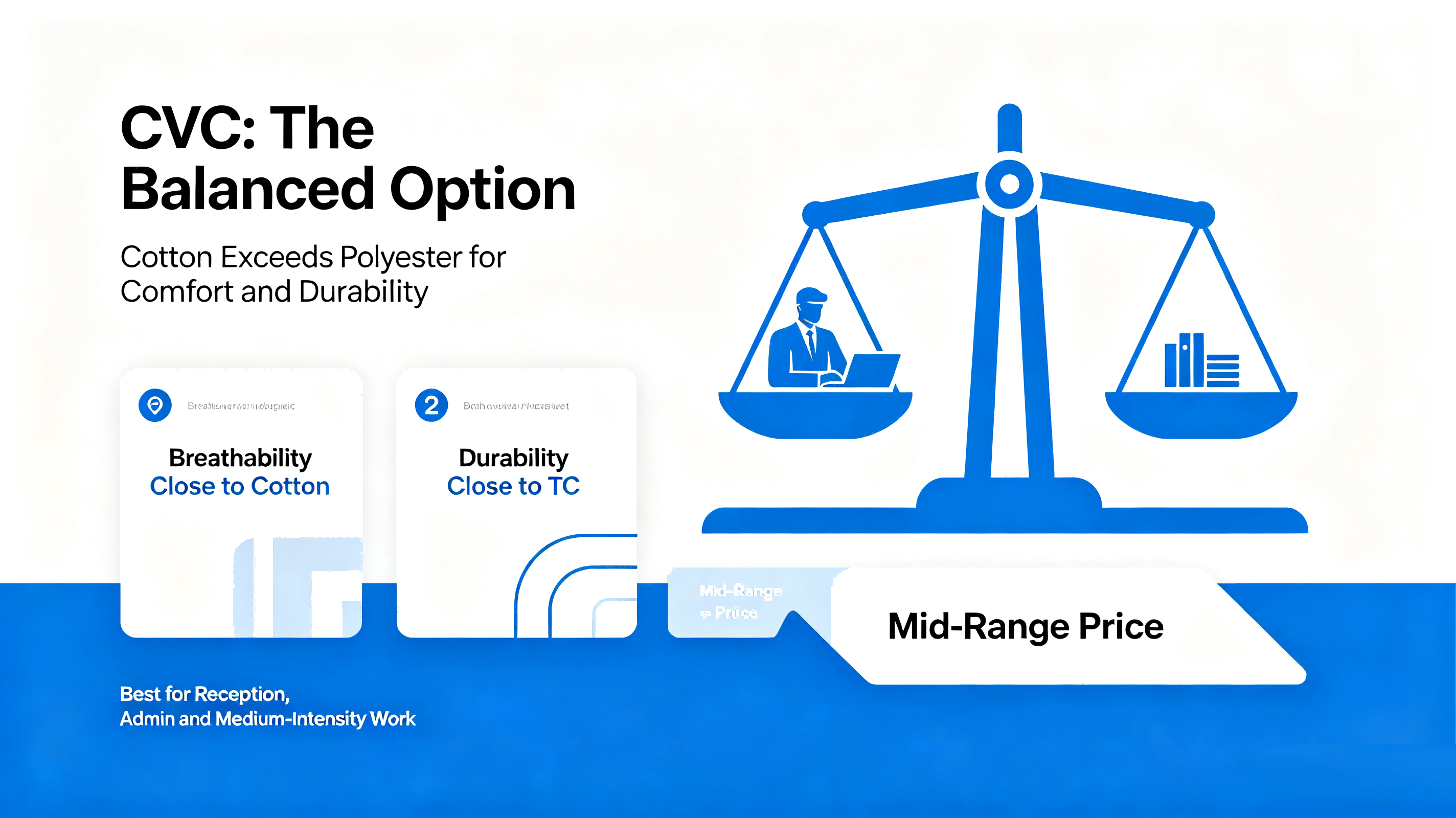
CVC is still a poly-cotton blend, but because cotton exceeds polyester, performance leans closer to the comfort of pure cotton while retaining the durability and wrinkle resistance of poly-cotton.
The advantages of CVC:
Comfort close to cotton. CVC's breathability and moisture absorption are similar to cotton, significantly better than polyester or TC. Moisture vapour transmission rate is about 5,000–6,500 g/m²/24h—much better than poly-cotton.
Durability close to poly-cotton. The added polyester reduces shrinkage, improves wrinkle resistance, and boosts abrasion resistance. Can withstand industrial washing up to 50 cycles or more.
Mid‑range price. 220gsm CVC twill runs about 13–18 yuan per metre. CVC uniforms cost about 10–15 yuan more per set than equivalent TC. A full set runs about 85–110 yuan.
The downsides of CVC:
Attracts oil stains. Polyester is hydrophobic and has an affinity for oils – oil stains are harder to wash out than on cotton.
Prone to static. Can generate static during wear, attracting dust.
Which jobs are CVC best for?
Manufacturing workshops, maintenance, equipment inspections – medium‑intensity roles. CVC meets workers' basic comfort requirements while maintaining appearance and structural stability through frequent washing and daily wear.
Reception desks, administrative staff, outside sales reps – jobs that involve both air-conditioned indoors and occasional outdoor activity – CVC strikes a good balance.
5. A quick comparison table
| Feature | 100% Cotton | TC (65/35) | CVC (60/40) |
| Cotton content | 95%+ | 35% | 60–70% |
| Polyester content | <5% | 65% | 30–40% |
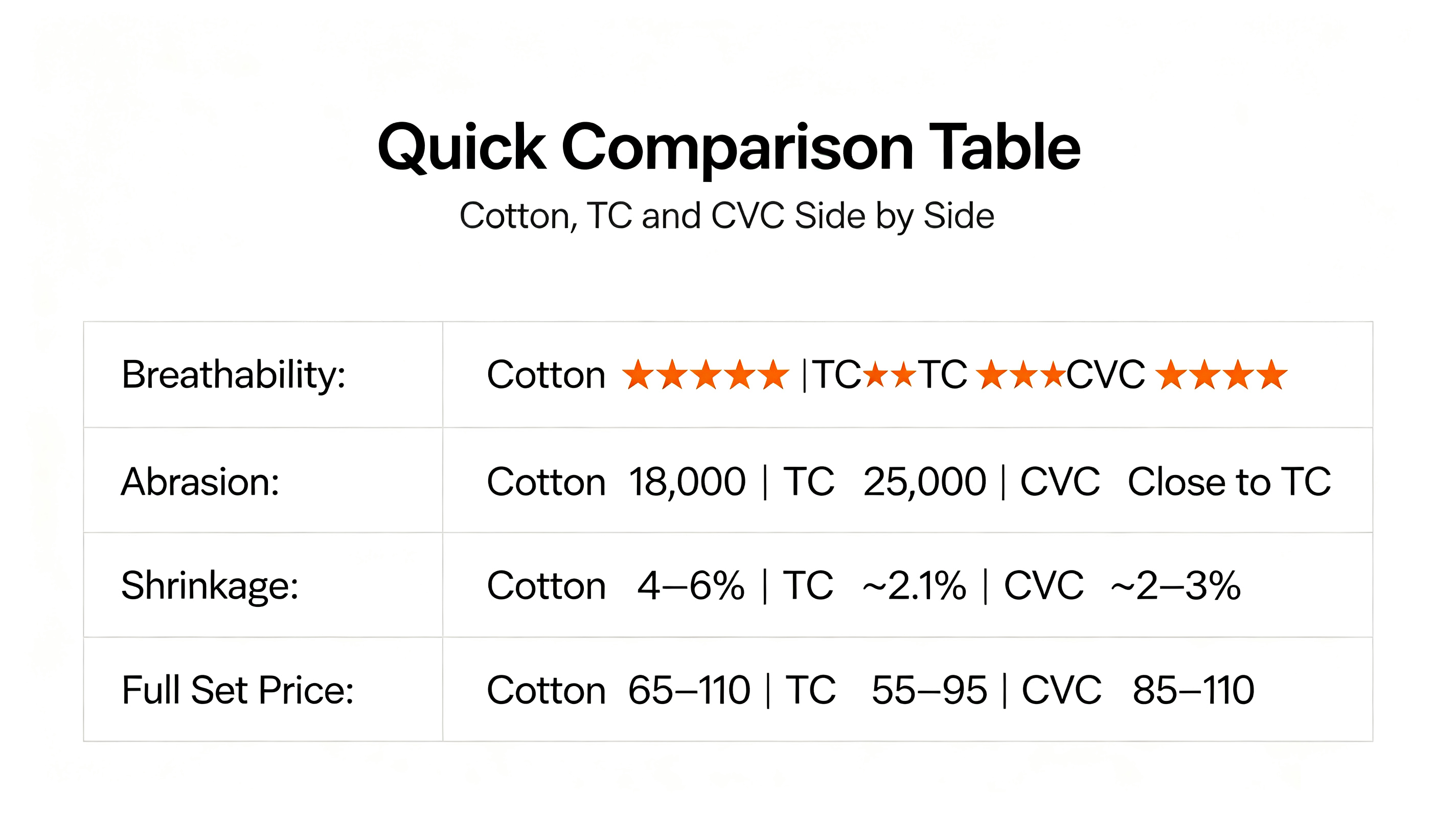
| Breathability/moisture | ★★★★★ | ★★★ | ★★★★ |
| Abrasion (Martindale cycles) | 18,000 | 25,000 | Close to TC |
| Shrinkage rate | 4–6% | ~2.1% | ~2–3% |
| Wrinkle resistance | ★★ | ★★★★★ | ★★★★ |
| Drying speed | ★★ | ★★★★★ | ★★★★ |
| Fabric price (yuan/m) | 16–22 | 12–16 | 13–18 |
| Full set price (yuan) | 65–110 | 55–95 | 85–110 |
6. How to choose – three principles
Principle 1: Look at the work environment first.
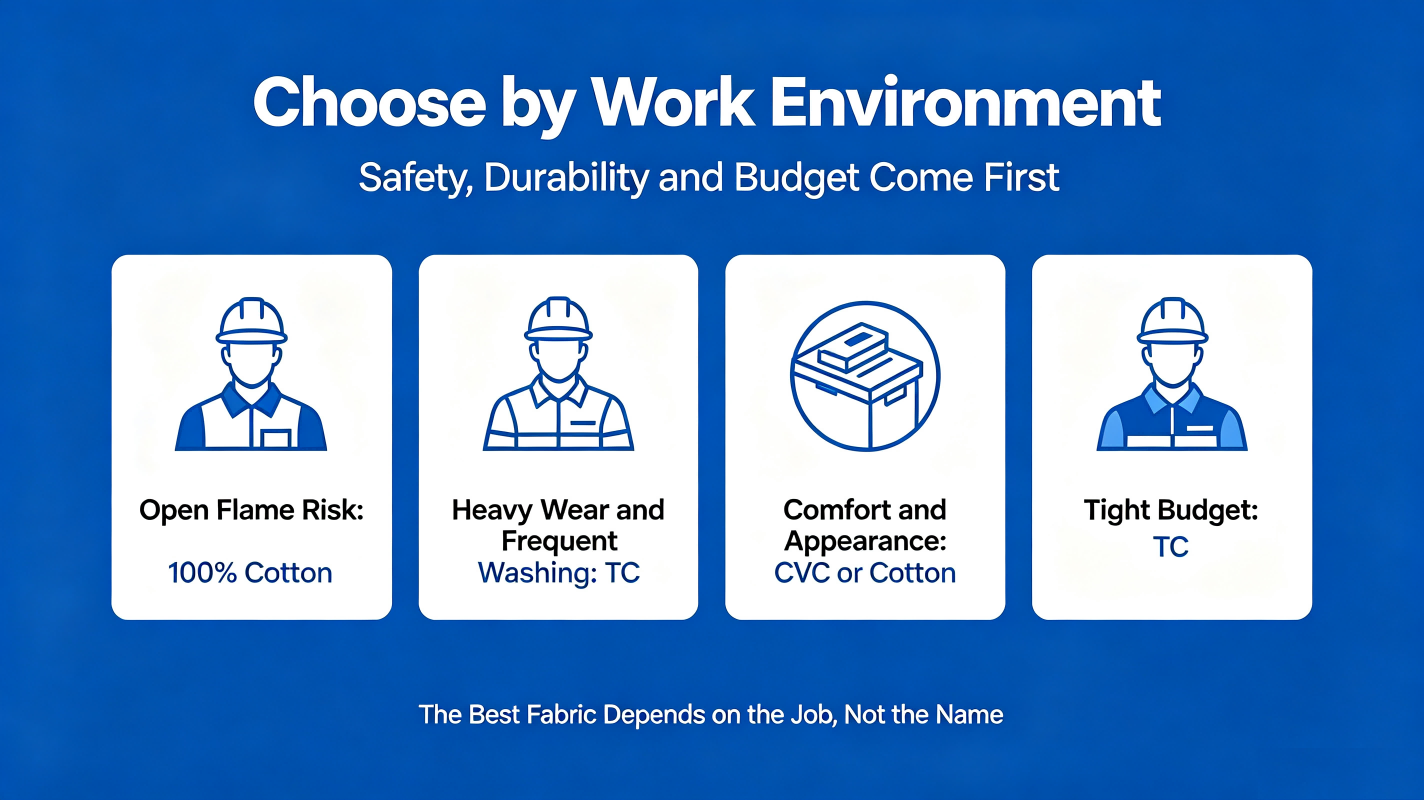
For jobs with open‑flame risks or synthetic restrictions (welding, kitchens, food processing) – 100% cotton is a must. Safety first, comfort second.
For factory floors, warehouses, maintenance – poly‑cotton gives the best value – tough, wrinkle‑resistant, and budget‑friendly.
For offices, reception, outside sales – CVC or cotton – comfort and image matter most. Go with cotton if budget allows, or CVC to save.
Principle 2: On a tight budget – go with poly‑cotton.
For the same style and weight (spring/autumn), a full set runs about 100–130 yuan for cotton, 85–110 yuan for CVC, and 70–95 yuan for poly‑cotton. For an order of 200 sets, choosing TC over cotton saves 6,000–7,000 yuan. CVC over cotton saves 3,000–4,000 yuan, but CVC costs about 3,000 yuan more than TC.
Principle 3: Don't blindly choose 100% cotton for summer uniforms.
While cotton breathes well, it dries slowly when wet. In high‑sweat environments, a cotton uniform gets soaked and stays damp for a long time. In summer heat, comfort ranking is cotton > CVC > poly-cotton. But in a non-air-conditioned workshop, CVC's quick-dry advantage is actually more practical.
One last honest word
100% cotton, poly-cotton, CVC—none is absolutely better. It all depends on what the job demands.
Cotton is comfortable but not tough—good for light-duty, image-conscious roles. Poly-cotton is tough but less breathable—good for heavy-duty, high-wear roles. CVC sits in the middle—a "safe bet" for most jobs.
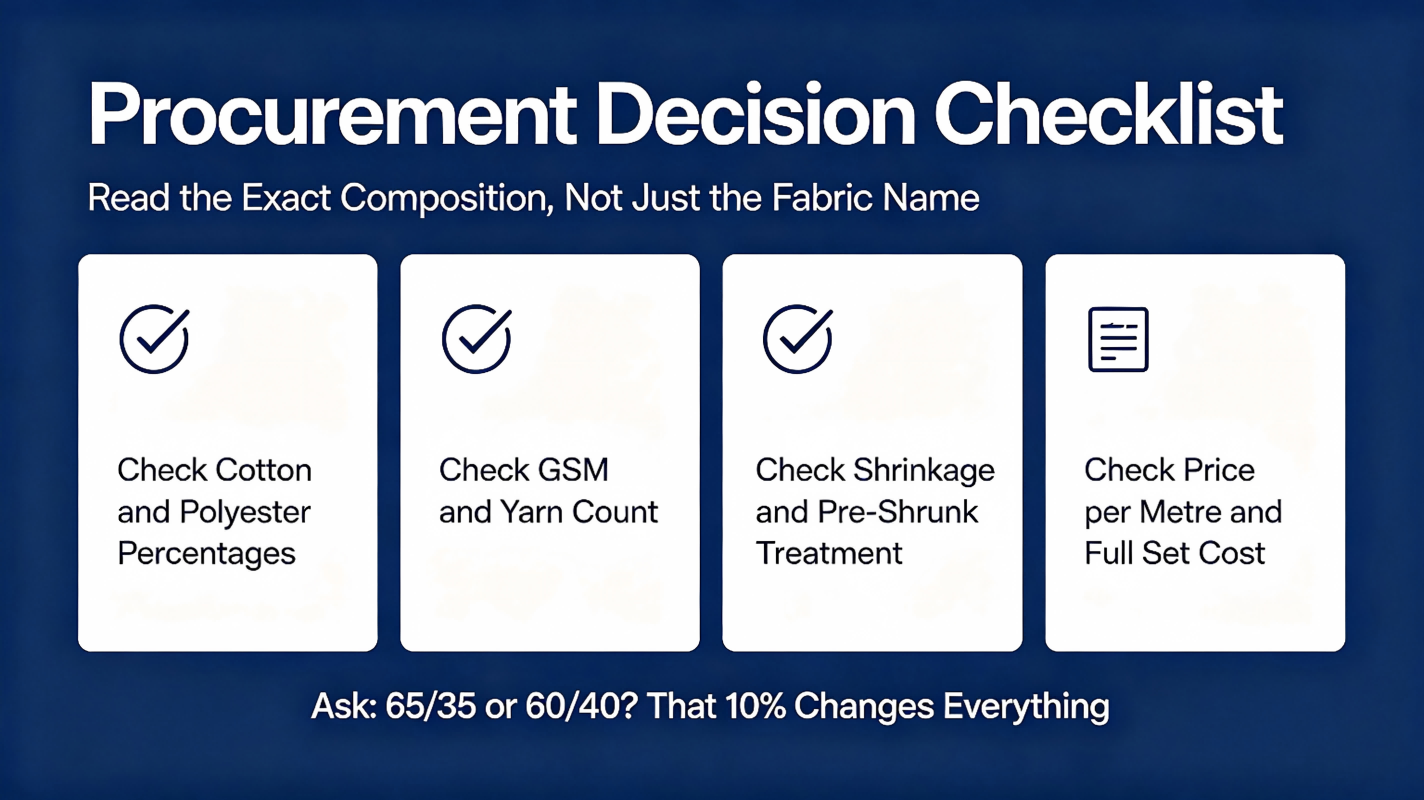
When buying, don't just look at the fabric name—read the exact composition on the label. 65/35 vs. 60/40 – that 10% difference in cotton content affects feel, price, and durability significantly.
Once you know the differences, the next time a supplier quotes you, you can ask: "Is your poly‑cotton 65/35 or CVC? What's the cotton percentage?" – and that alone tells everyone you're not just a buyer who nods at prices anymore.