Unatafuta Nini?


Introduction
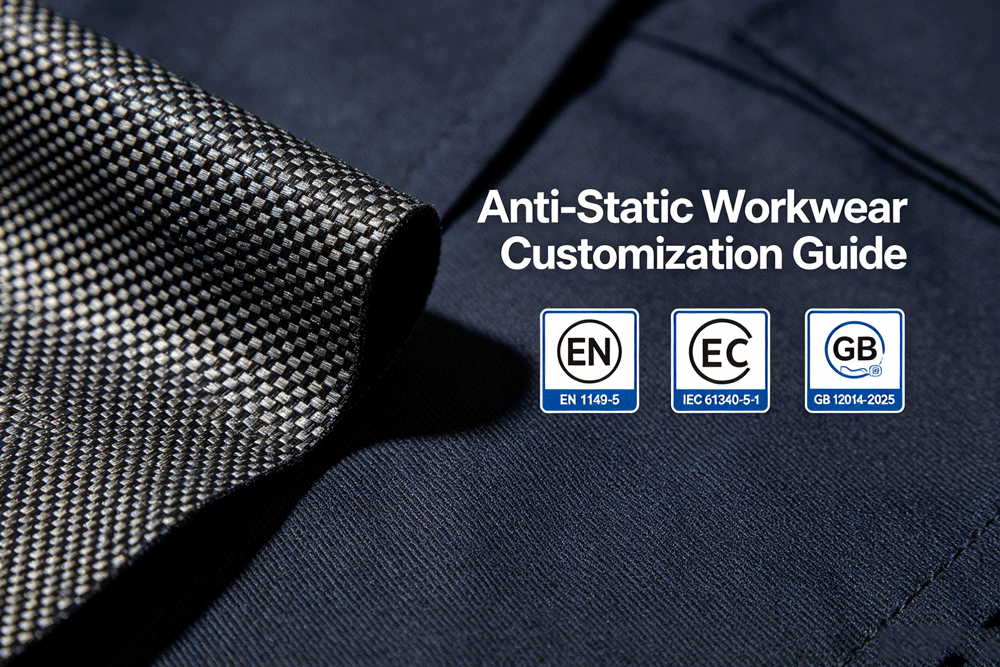
Anti-static (ESD) workwear is essential for industries where electrostatic discharge can damage sensitive electronics or ignite flammable atmospheres. Customizing this protective clothing requires precise fabric selection, compliance with international and local safety standards, and a tightly managed OEM process. This guide covers everything a B2B buyer needs to know—from core fabric technologies to factory evaluation.
1. Core Fabric Technologies
The core mechanism is embedding conductive fibers into the textile to safely dissipate charges.
 Polyester + Carbon Grid
Cotton-Blend + Carbon
Inherently Anti-Static Fibers
Polyester + Carbon Grid
Cotton-Blend + Carbon
Inherently Anti-Static Fibers
2. Key Compliance Standards
Your custom workwear must carry permanent labels proving conformity. Major global standards include:
| Standard | Scope | Key Requirement |
| EN 1149-5 | European standard for explosive atmospheres | Surface resistivity and charge decay |
| IEC 61340-5-1 | International standard for ESD control in electronics | Resistance limits for personnel grounding |
| GB 12014-2025 | China’s mandatory national standard | Two grades (A/B) based on charge and wash endurance |
Note: GB 12014-2025 classifies garments into Grade A (≤0.6μC charge, ≥33h wash resistance) for high-hazard zones like fuel stations, and Grade B (≥16.5h wash resistance) for standard cleanrooms. Always request test reports aligned with your target market.
3. OEM Customization & Production Timeline
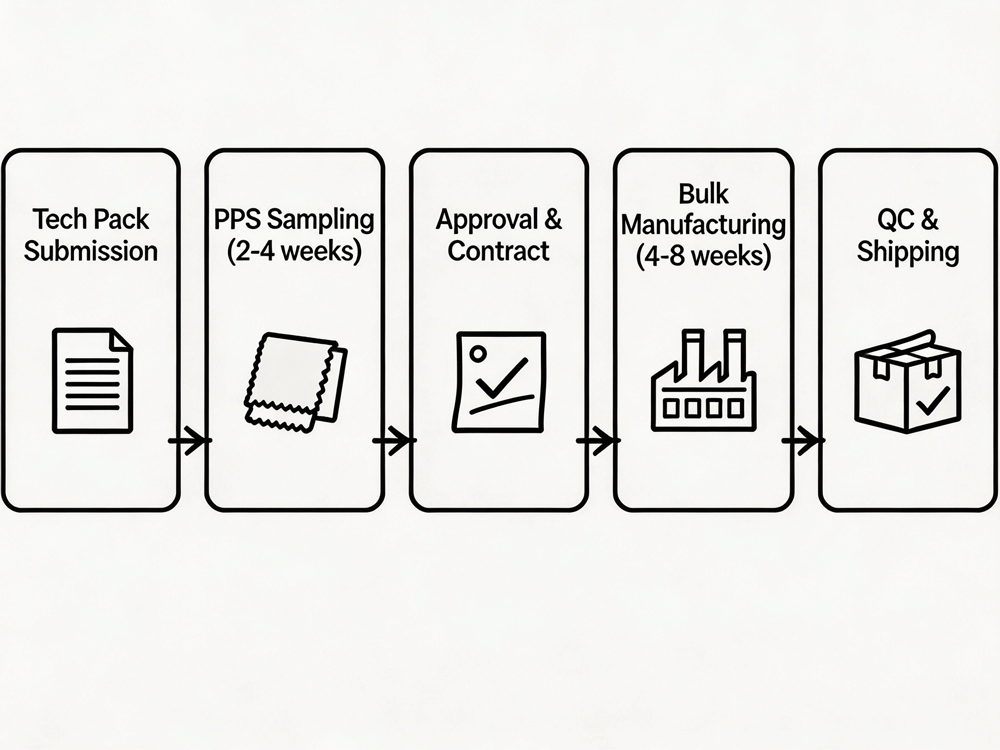
A typical OEM journey follows five clear stages:
Requirements & Design – You supply your tech pack: fabric grade, color (Pantone matching possible), sizing (Asian, EU, US), logo placement, and any special trim restrictions.
Sampling – The factory produces a Pre-Production Sample (PPS) for your on-site resistivity and fit testing.
Approval & Contract – Once the sample passes your audit, pricing and production terms are signed.
Bulk Manufacturing – Strictly follows the approved sample; conductive grids are inspected at every panel.
Quality Control & Delivery – Final random testing of surface resistivity and visual inspection before packing.
Typical Timeline
Fabric sourcing & lab testing: 1–2 weeks
Sampling & confirmation: 2–4 weeks
Bulk production: 4–8 weeks
4. Branding Without Compromising ESD Safety
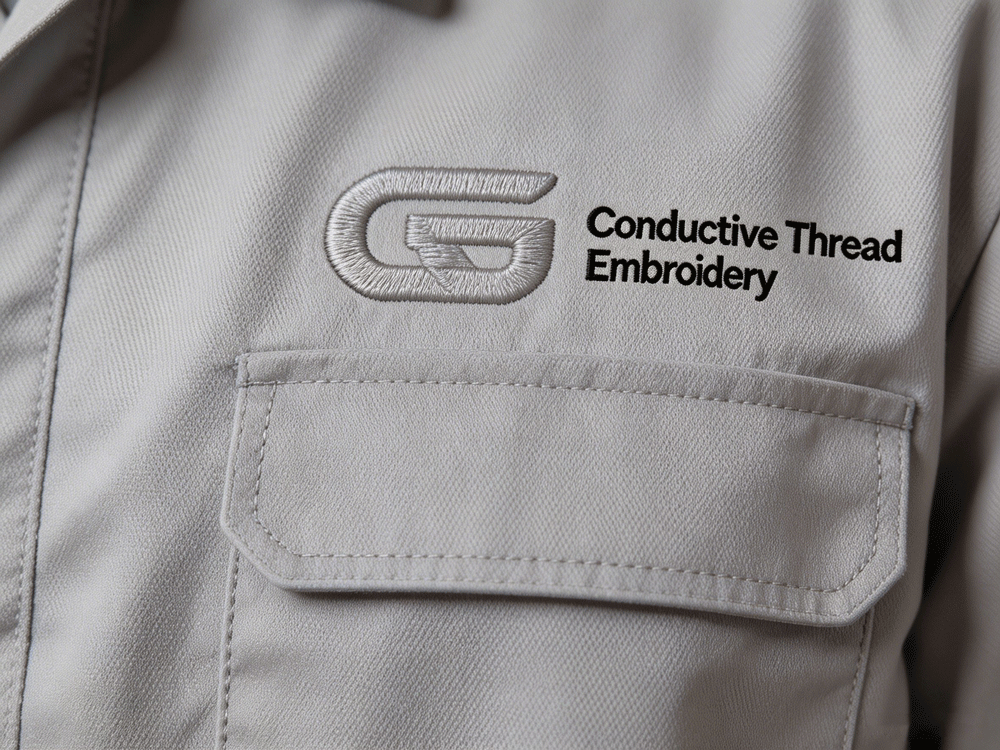
Many buyers worry that embroidery or heat transfers will create insulation islands that trap static. Best practices include:
Use pre-tested conductive threads for embroidery.
Apply logos in areas away from primary conductive pathways (e.g., upper sleeve or chest pocket flap).
Heat transfers must be thin, non-insulating and tested on a sample garment first.
Avoid large metallic accessories or zippers directly over conductive grid lines.
5. Evaluating a Reliable Manufacturer
Look for:
Valid third-party lab reports for EN 1149-5, IEC 61340-5-1, or GB 12014-2025.
A proven MOQ structure (commonly 100–500 pieces per style for custom-dyed orders, but can be lower).
In-house surface resistivity test equipment and documented QC records.
Direct factory with ISO 9001 or specialty labor protection certifications.
6. B2B Buyer FAQ
Q: What fabric options do you have for anti-static workwear?
A: We offer polyester/carbon grid, cotton/carbon blends, and inherently anti-static FR blends. Selection depends on your working environment—cleanroom, petrochemical, or electronics assembly.
Q: What is the typical OEM timeline?
A: Sampling takes 2–4 weeks after design freeze; bulk production is 4–8 weeks, depending on order complexity and quantity.
Q: Can you add our logo without ruining the anti-static function?
A: Absolutely. We use conductive embroidery thread and test prototypes to ensure the logo does not interfere with the conductive grid.
Q: What’s your MOQ?
A: For standard fabrics, MOQ can be as low as 500 pieces per style. Custom dyeing may require 1000 pieces.
Q: How do you guarantee the anti-static effect after repeated washing?
A: We can provide wash-after-wash test data upon request.
Ngao ya dhahabu sio tu muuzaji, bali pia ni nguzo ya kuaminika katika mfumo wako wa mnyororo wa usambazaji. Tunasaidia kununua mameneja kuboresha uvumilivu wa usambazaji na kuhakikisha shughuli thabiti kwa kujenga mnyororo thabiti wa viwanda, Mchakato wa usimamizi wa uwazi na mifano ya ushirikiano na ubunifu ya ushirikiano.
Ngao ya Dhahabu -Mwenzi Wako Anayetegemeka
WhatsApp:86 133 7788 3692
Barua pepe:[email protected]